



Milk condensed with sugar
The homeland of ?condensed milk?, beloved since childhood, turned out to be not the USSR, but several other countries. They competed with each other for primacy, but the winner's laurels went to the patent. In the article you will learn many interesting facts about this product that we have not heard about before.
Сalories
320 calProteins
7.20 grFats
8.50 grCarbohydrates
56 grNutritional value per 100 g. Calories calculated for raw foods.
Glycemic index
80Common allergen
yesMake sure that you do not have an individual intolerance to this product.

The history of the appearance of milk condensed with sugar
The process of creating condensed milk is very simple – you need to mix the milk with sugar, heat it and evaporate some of the moisture. Everyone loves condensed milk since childhood; it combines the valuable qualities of milk and sweet taste.
Many are convinced that this product is truly Russian, Soviet. But the history of the origin of condensed milk is completely different. It was patented by Texas inventor ? Gail Borden back in the mid-19th century, and several countries are fighting for the right to invent it. Borden had nothing to do with the food industry, but he was interested in the method of thickening products for multi-day trips or military campaigns. Borden was also saddened by the untimely deaths of children poisoned by low-quality milk. Therefore, the idea of condensation and preservation took on additional meaning.
In Russia, such a product began to be made in 1881, and in Soviet times, in 1979, GOST was established for the production of condensed milk. Since then, the composition includes only two substances – milk and sugar.
Latin American version. There is another version of the appearance of this product, less common. According to it, milk began to be condensed near the village of Cañualas (Buenos Aires province). One day, the maid forgot the milk in a closed jar, leaving it on smoldering coals. After some time, the can exploded, and the composition that was in it was to the taste of the two generals. They were just celebrating a local victory and were in a tent with a field kitchen. Since then, condensed milk has become widespread, first in Argentina, and then throughout the American continent.

But residents of the neighboring country of Chile can argue with the Argentines. They are completely confident that they are right: the Chileans invented milk sweets back in the 17th century. This is a national food that is the property of the people.
Mexico considers condensed milk exclusively its invention, but there is a difference – goat milk is mixed with cow’s milk.
French version. French chefs also did not remain indifferent to this story and attributed the creation of condensed milk to themselves. According to the French version, the product was invented by a certain Nicolas Appert back in 1820. Apper patented his invention, but did not organize mass production: this was done by the American Gail Borden.
The French are sure that the invention of milk sweets is connected not only with the name of the little-known shopkeeper Appert, but with the Emperor Napoleon Bonaparte himself. He was obsessed with the issue of preserving quality products for the nutrition of soldiers and officers. The emperor even announced a competition for the best canned food for the army. The shopkeeper Upper found out about this and began experiments, as a result of which condensed milk was born.
Nicolas Appert evaporated the liquid to 2/3 of the original volume, and then packaged the mass into glass bottles? with a wide neck. To prevent the product from spoiling, he carefully pasteurized it in boiling water and sealed it. Tin cans appeared much later and were used by the British. Apper worked on his product for 14 years, achieving perfection and productivity. For this he received an award from the emperor and a gold medal?. Appert also created chicken stock cubes and the famous cutlet de volley.
The benefits and harms of milk condensed with sugar
People with lactose intolerance cannot drink pasteurized and boiled milk due to the lack of necessary enzymes for digestion. In this case, a teaspoon of condensed milk in coffee will completely replace fresh milk and enrich the taste of the drink.

The benefits of condensed milk are as follows:
✅ absence of preservatives, flavor enhancers and other additives;
✅ the presence of protein has a positive effect on the state of muscle tissue and metabolism;
✅ milk protein casein is quickly absorbed and saturates the body;
✅ milk fat contains beneficial acids;
✅ calcium is completely preserved when milk is condensed;
✅ contains vitamins A, B, E and D;
✅ contains phosphorus, potassium and magnesium;
✅ The product also contains amino acids that are responsible for the production of the happiness hormone – serotonin. Therefore, drinking condensed milk is useful when you are in a bad mood or during PMS.

Let’s talk about the disadvantages of such a tasty product.
❌ This is a fairly high-calorie product, especially with added sugar. To avoid gaining excess weight, it is recommended to limit yourself to two tablespoons per day.
❌ For patients with diabetes mellitus, the consumption of condensed milk is strictly contraindicated, as is for those suffering from obesity.
❌ What other harm can this delicious dessert bring to the body? Of course, it’s all about sugar: too much of it. The presence of a large amount of sugar in the mass binds calcium molecules and makes them less available for absorption by the body.
Nutritionists do not recommend consuming condensed milk as an independent dish, only in combination with other products – cottage cheese, pancakes, fruits, drinks.
What does milk condensed with sugar taste like?
Condensed milk has a rich milky taste – sweet, but not cloying.
How to eat milk condensed with sugar
The condensed product can be used to make confectionery and ice cream, and it is also added to drinks. The sad mass neutralizes the bitterness of tightly roasted coffee beans and adds notes of soft aroma to the cocoa drink ☕️.
Condensed milk is added to the following confectionery products:
- butter cream for cakes and pastries;
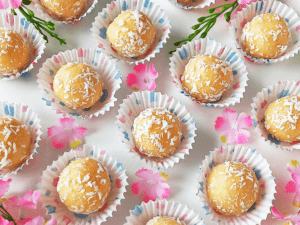
- homemade sweets;
- cake “Potato”;
- impregnation for sponge cakes;
- panna cotta.
Condensed milk is often used when baking cake layers for homemade cakes, for example, for “Prague”. This cake uses a whole jar of sweet mass – half in buttercream, the other half in dough for the cakes. All children like a hearty and healthy cottage cheese breakfast with condensed milk and sour cream sauce. Many gourmets like an avocado cocktail with condensed milk; it is prepared in a blender.
But condensed milk is used not only in confectionery: it has found application in cooking. For example, in preparing marinade for chicken and pork. Sweet notes add piquancy to a spicy dish and emphasize its sophistication.
How and for how long to store condensed milk with sugar
Storage of products with a limited shelf life must be careful: expired preservation can cause poisoning. Therefore, before opening the can, check the release date and storage time in closed/opened form.

Ideal storage conditions for a closed jar are from 0️⃣ to +1️⃣0️⃣°C, but they are not always achievable. The material of the container also matters:
- in a tin can it can be stored unopened even at room temperature for 11 months;
- condensed milk is stored in a plastic container in the refrigerator for six months.
Opened packaging is of little use for storing the product even in the refrigerator; it is recommended to pour the milk into a glass jar or ceramic dish.
So who is the real inventor of condensed milk? According to the French version, it was during the reign of Napoleon that a method of thickening the product was invented. Then, in 1810, the English industrialist Peter Durand received a patent for the production of condensed milk, and he was the first to use tin cans for packaging. In 1826, the Englishman Melbeck began adding sugar to milk. But it was the American Borden who popularized the product and launched industrial production.
Curious facts
- Interest in the sweet dairy product all over the world is obvious, even legends have formed. One of them says that they learned to condense milk in India in ancient times - 5000 years ago. The Hindus cooked it, and they even have a name - rabadi. It is not possible to dispute this information, because none of the modern people lived for 5000 years on planet Earth.
- In Soviet times, the product was packaged not only in cans, but also in tanks. For example, they were brought to the production of confectionery products. Also packaged in large flasks and blocks. The milk was frozen in blocks for safe transportation.
- The blue and white label design for a 400 g can was developed in 1939 by Iraida Fomina. This design is still popular today despite other labels. The 325 ml jar also remained in demand.
- Condensed milk was in short supply in Soviet times; people specially went to the capital and other large cities to buy it.
- Since 1996, GOST for the production of many products ceased to apply. Since then, fake condensed milk began to appear on store shelves: milk fat was replaced with palm oil, sugar with substitutes, and cow's milk with soy milk. This invention tasted like Soviet condensed milk, but the nutritional value of the product was inferior in all respects.
- Our favorite condensed milk from childhood in a tin can is also sold in Thailand. There are bears depicted on a blue and white background.
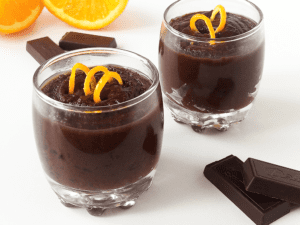
If you would like to know what can be made from milk condensed with sugar, below we have selected recipes with milk condensed with sugar for you.





Welcome to the culinary site en.ipepper.org!
On our project you will find a huge number of various
step by step recipes with high quality photos.
